Interview scheduling looks simple until you are running it at enterprise scale. One role can involve a panel, a tight timeline, multiple time zones, and interviewers who are already stretched.
Recruiters and recruiting coordinators end up spending a surprising amount of time fixing schedules that were “done” yesterday.
Below are the five breakdowns we see most often inside enterprise teams, plus what to do about each one. If you want the bigger data-backed view of why this keeps happening, delve into our Interview Scheduling Gap report of 2025.
Summary
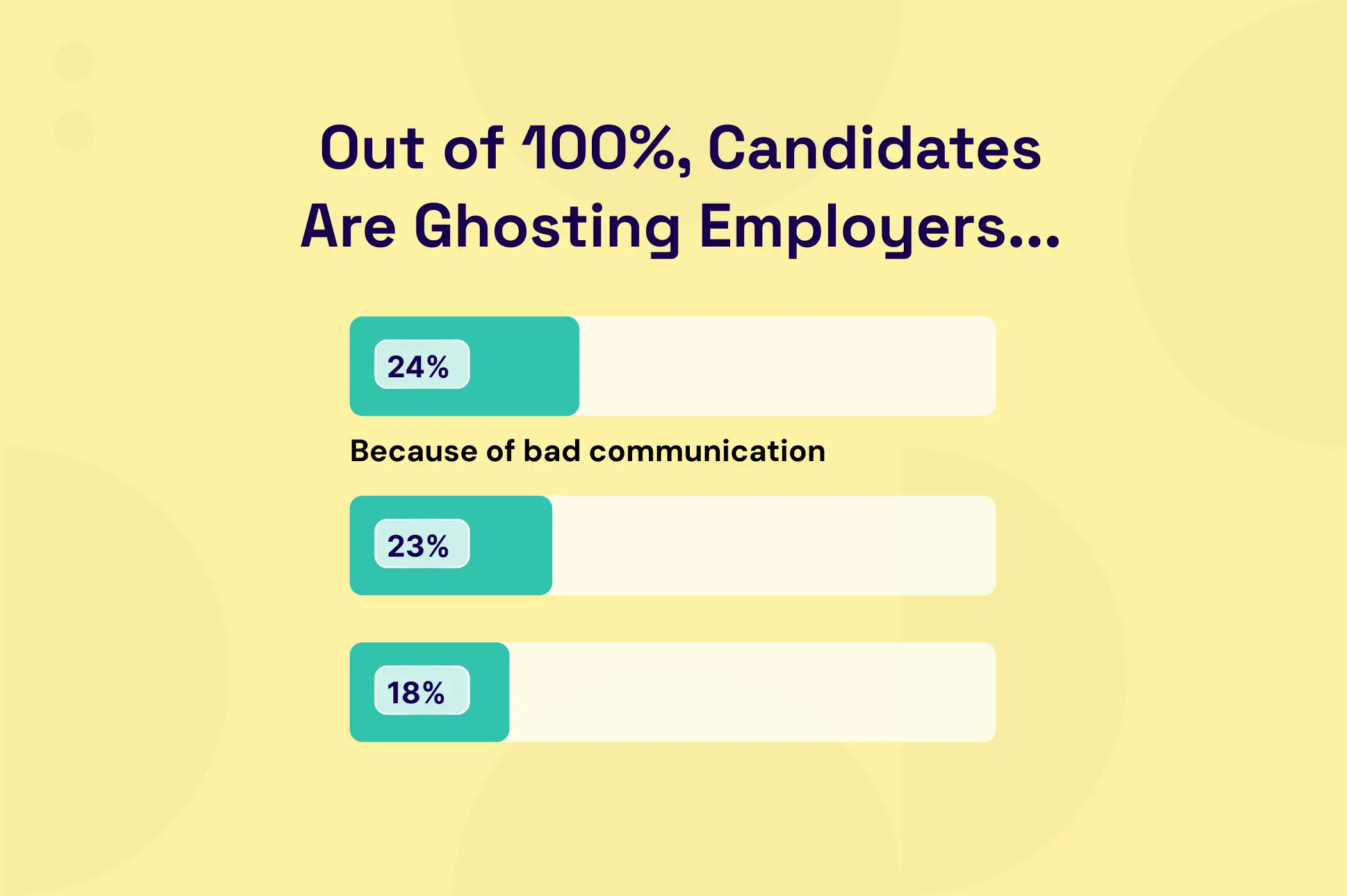
Enterprise interview scheduling breaks in predictable ways: calendars drift, panels multiply conflicts, bottlenecks form around the same few interviewers, time zones add delay, and communication scatters across tools. These breakdowns slow hiring and weaken candidate experience. Greenhouse’s research shows that communication failures play a real role in candidate drop-off, including poor communication as a cited reason for ghosting.
1. Calendar drift
This is the most common breakdown because it is subtle. Calendars look accurate in the moment, then change without warning.
Over the past week, these are the most common reasons a calendar becomes a bane of your existence rather than a source of truth:
- A leader gets pulled into a customer call same day as the interview.
- An interviewer moves a meeting and forgets to update blocks.
- A Google calendar permission setting hides real availability.
For recruiting coordinators, calendar drift creates a slow leak of time. They have to re-check availability, rebuild the loop, and resend details.
And candidates see it as uncertainty and that the company, 'can't get their act together,' so they ghost the process or say, "I'm not interested."
In turn, everyone loses trust in the process.
A practical fix is to stop treating calendars as a final source of truth.
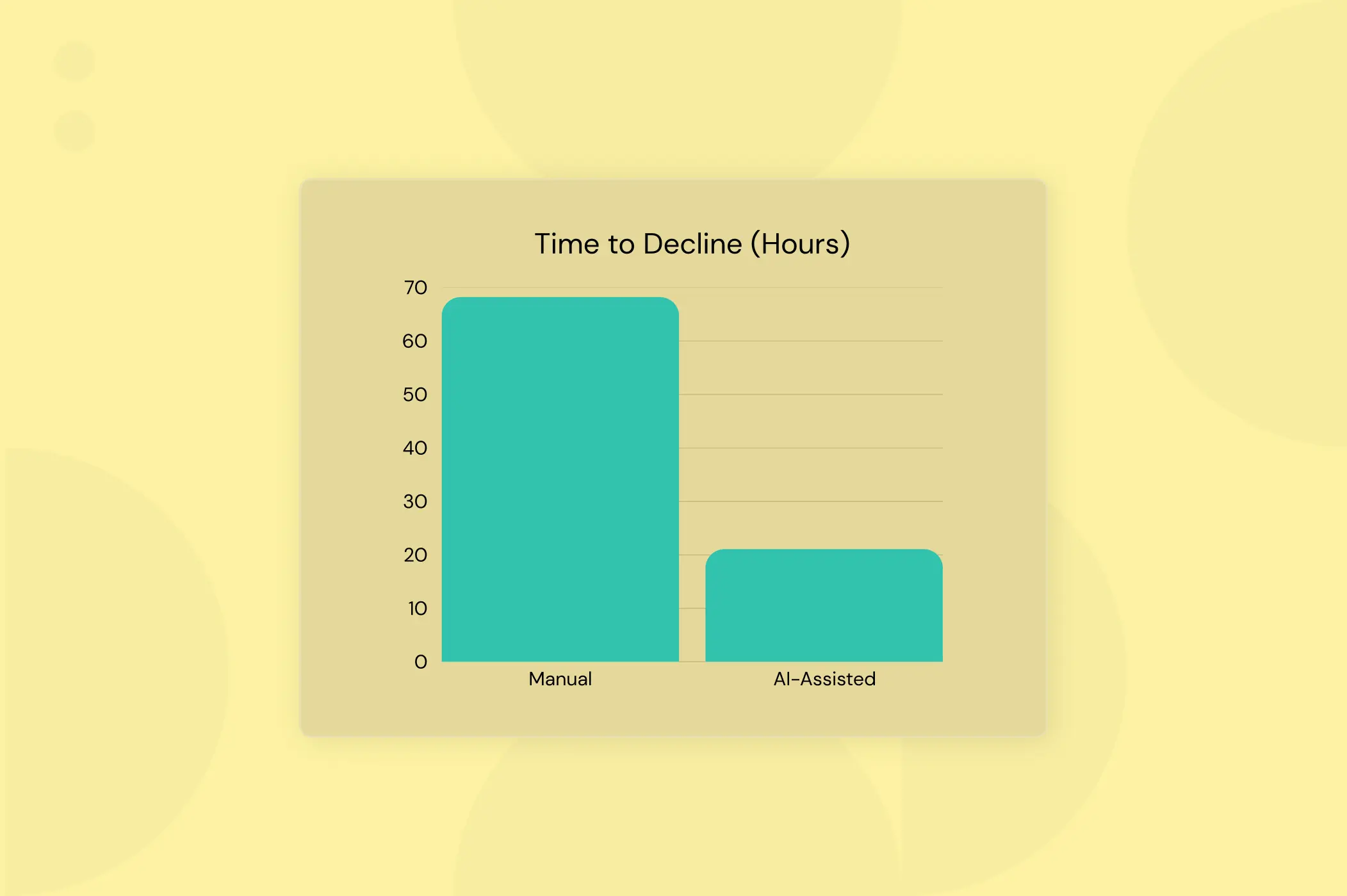
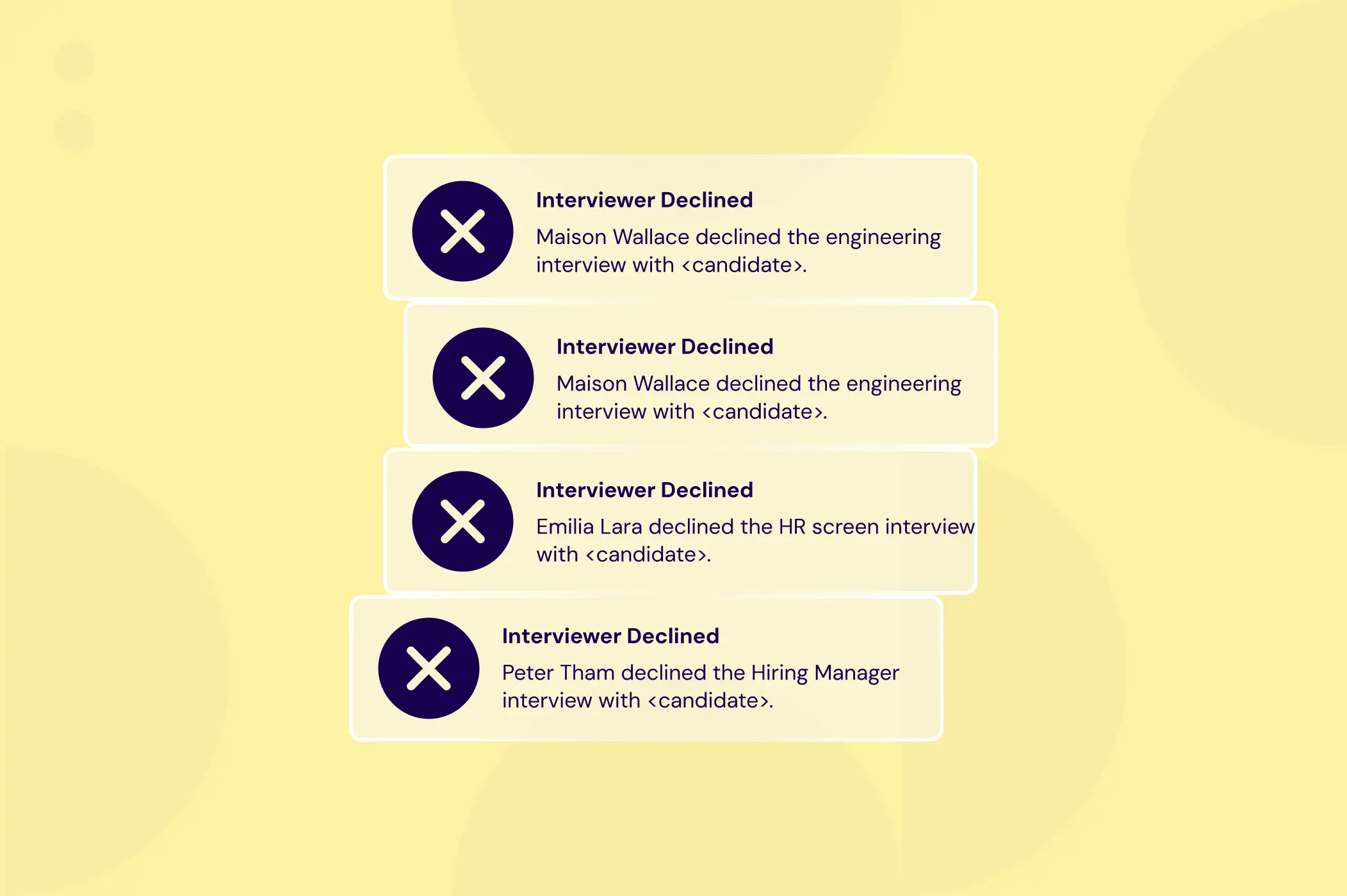
Enterprise teams need scheduling logic that continuously validates availability and can automatically suggest replacements when the schedule changes. An AI scheduling agent, including our own fyi agent, will automatically switch out interviewers who cancel with a similarly senior team member to handle the interview.
2. The panel multiplier
Panels feel efficient because they compress decision-making into one block.
The downside is that each additional interviewer multiplies the chance of failure. A two-person interview is manageable. A four-person panel becomes a coordination problem because one person's conflict breaks the whole plan.
This is where basic interview scheduling tools hit a ceiling. They can "find a time," but they struggle with rules like interviewer capacity, role coverage, and fair distribution across the team.
So, when the panel breaks, coordinators go back to manually reaching out to the appropriate interviwers and adding in the Google Calendar invite for the panel.
A practical fix is to build panels with coordination rules, not just availability. Panels should be created from an interviewer pool with backups, capacity limits, and coverage requirements, so one conflict does not force a full rebuild.
At candidate.fyi, our AI-focused tool will automatically identify and train potential interviewers within your organization to grow your interviewer pool. Further, our tool will ensure a fair distribution of interviews, preventing burnout.
Unlock the Future of Recruiting— Book a Demo Today!


3. The bottleneck interviewer
Every enterprise team has a version of this: one leader "has to meet every candidate." Or worse, one interviewer becomes the default because they are reliable, even though they are overloaded.
Bottlenecks are where interview scheduling turns into a waiting game. The rest of the loop can be ready, but the entire process pauses because the same person is unavailable.
Candidates experience it as slow progress, and so it increases their stress. Recruiting coordinators experience it as constantly having to slack the same person to ask for the 15th "favor."
A practical fix is to treat interviewer coverage like capacity planning. If one person is required, create trained backups and define clear rules for when a substitute is acceptable.
Scheduling systems should also support automatic load balancing so the reliable people are not punished for being reliable. A modern interview scheduler can make these rules explicit and enforce them automatically.
4. Time zone lag and async replies
Global hiring adds delay even when everyone is responsive. For the recruiting coordinator, it can become the worst waiting game since that Instagram ad sold them on a product that didn't exist.
Here's what that looks like from a customer call this week:
- A candidate in Europe replies after North America signs off.
- The coordinator sees the response the next morning.
- An interviewer in another region has limited overlap hours.
This outline is simple to write, but it's the most commonly cited problem that recruiting coordinators face.
So, the breakdown often shows up as "back-and-forth fatigue." Candidates get tired of the constant, "none of those times work. What about these?" Coordinators get stuck managing long sequences of availability checks. And then managers start asking why scheduling is slow.
A practical fix is to reduce the number of handoffs required to lock in times. Self-serve availability capture, automated confirmations, and time zone-aware scheduling options are the solutions our customers use to eliminate this waiting game.
Teams also benefit from predefined "interview windows" that reflect real overlap hours rather than hoping a perfect slot exists.
All of those fixes, including self-serve availability capture and time zone-aware scheduling are some of the core features within our tool.
5. Communication scatter
Finally, we have interview details that live in too many places: email, ATS messages, calendar invites, documents, and internal Slack threads.
Now, from the candidate's side, this often shows up as multiple email threads spread across multiple days with different prep materials. It's very easy to lose the interview prep.
For recruiting coordinators, they have to answer the exact same question from candidates more than 4 times per day, as cited by our friends at Discord.
So, this issue is not a rare edge case. Greenhouse's research shows that a large share of candidates have ghosted employers during the hiring process, and it highlights communication breakdowns as a driver. The same theme appears in Greenhouse’s earlier research on post-interview ghosting, which underscores how damaging silence can feel once a candidate has invested time.
A practical fix is to centralize candidate communication in a candidate portal that acts as the single place for schedule, prep, interviewer details, and next steps. When the portal updates in real time, candidates do not have to hunt through email threads to understand what is happening.
You can check out our case study with Bally’s, a customer who explains how our candidate portal has created a much better candidate experience.
What these breakdowns have in common
Each breakdown is a version of the same underlying issue: real people change plans, respond at different speeds, and follow different habits. Rigid systems assume the opposite.
Enterprise teams feel the gap more sharply because more people are involved and the stakes are higher.
If your team is seeing these breakdowns weekly, the goal should be resilience. A resilient process keeps moving when plans change.
That usually requires four building blocks:
- automated interview scheduling that handles confirmations, reminders, conflicts, and replacements
- a candidate portal that keeps communication clear
- in-process feedback signals that catch issues early
- a coordination view that shows who is waiting on whom, in real time
Those themes are covered in more detail in our Interview Scheduling Gap report.
Questions & Answers
What is the most common issue in enterprise interview scheduling?
The most common issue is "calendar drift," where schedules change unexpectedly, causing confusion and delays. This can happen due to last-minute meetings, overlooked calendar updates, or permission settings that mask real availability.
How can I manage larger interview panels effectively?
To manage larger interview panels, it's crucial to establish coordination rules such as capacity limits and backup interviewers. This ensures that a single person's conflict doesn't derail the entire process.
What strategies can help prevent bottleneck interviewers?
Treat interviewer coverage like capacity planning by creating trained backups and setting clear substitution rules. Utilizing scheduling systems that support load balancing can help distribute interviews evenly among team members.
How do time zone differences affect interview scheduling?
Time zone differences can lead to delays in communication and scheduling, especially when candidates and interviewers are in different regions. Reducing the number of handoffs and utilizing time zone-aware scheduling tools can mitigate these delays.
What can be done to improve communication throughout the interview process?
Centralizing communication in a candidate portal can improve clarity and reduce confusion. This portal should contain all relevant details, such as schedules, prep materials, and next steps, to keep candidates informed without the need to sift through multiple email threads.