5 Tasks Recruiting Coordinators Can Focus on When Scheduling Is Automated

The recruiting coordinator role has spent years buried in logistics. Most days involve dealing with admin tasks. Tasks like chasing availability, rebuilding schedules when conflicts appear, or sending reminders that get ignored.
We often post content on our LinkedIn asking recruiting coordinators about these struggles, and they often say, “we’re dealing with all of the above.”
Our research from the Interview Scheduling Gap Report found that recruiting coordinators spend 46 percent of their time on admin-related tasks, specifically scheduling or fixing interviews. When nearly half of a coordinator's day goes to repetitive execution, there is little space left for the strategic work that actually improves hiring outcomes.
Automated interview scheduling changes that equation. When AI recruiting tools handle confirmations, reminders, conflict checks, and rescheduling logic, coordinators gain capacity to focus on work that recruiters and hiring managers cannot do themselves.
This post breaks down five high-impact tasks that recruiting coordinators can prioritize when scheduling stops consuming their day.
Summary
When automated interview scheduling removes the admin burden from recruiting coordinators, they can focus on five strategic tasks that directly improve hiring outcomes: building stronger candidate relationships through personalized communication, analyzing hiring data to identify process bottlenecks, coaching interviewers to deliver better candidate experiences, designing and testing new recruitment workflows, and managing employer brand and candidate engagement strategies.
These tasks transform the recruiting coordinator role from invisible execution to strategic advisory work that recruiters and hiring managers cannot do themselves. Teams using AI recruiting tools report that coordinators spend 46 percent less time on repetitive scheduling tasks, creating capacity for the relationship-building, data analysis, and process improvement work that actually moves the business forward.
Building Stronger Candidate Relationships Through Personalized Communication
When coordinators are not stuck managing calendar logistics, they can invest time in the interactions that actually shape how candidates experience the hiring process.
Most candidate communication today is transactional. Coordinators send calendar invites and reminders to keep the process moving, and candidates reply to those invites and ask where they are in the process. The problem is that transactional communication does not build trust or create memorable experiences.
Candidates remember the moments when someone took the time to check in, answer a question thoughtfully, or provide context that made the process feel less intimidating. Those moments are what separate a good candidate experience from a forgettable one.
When scheduling is automated, coordinators can shift their focus to personalized touchpoints that matter. They can reach out before a candidate's first interview to explain what to expect, check in after a challenging interview loop to see how the candidate is feeling, answer questions about the team or role in a way that feels conversational rather than scripted, and provide clarity when candidates are waiting for feedback or next steps.
This type of communication takes time and attention, which is why it rarely happens when coordinators are drowning in scheduling tasks. But it is also the work that drives engagement and reduces the friction that leads to candidate drop-off.
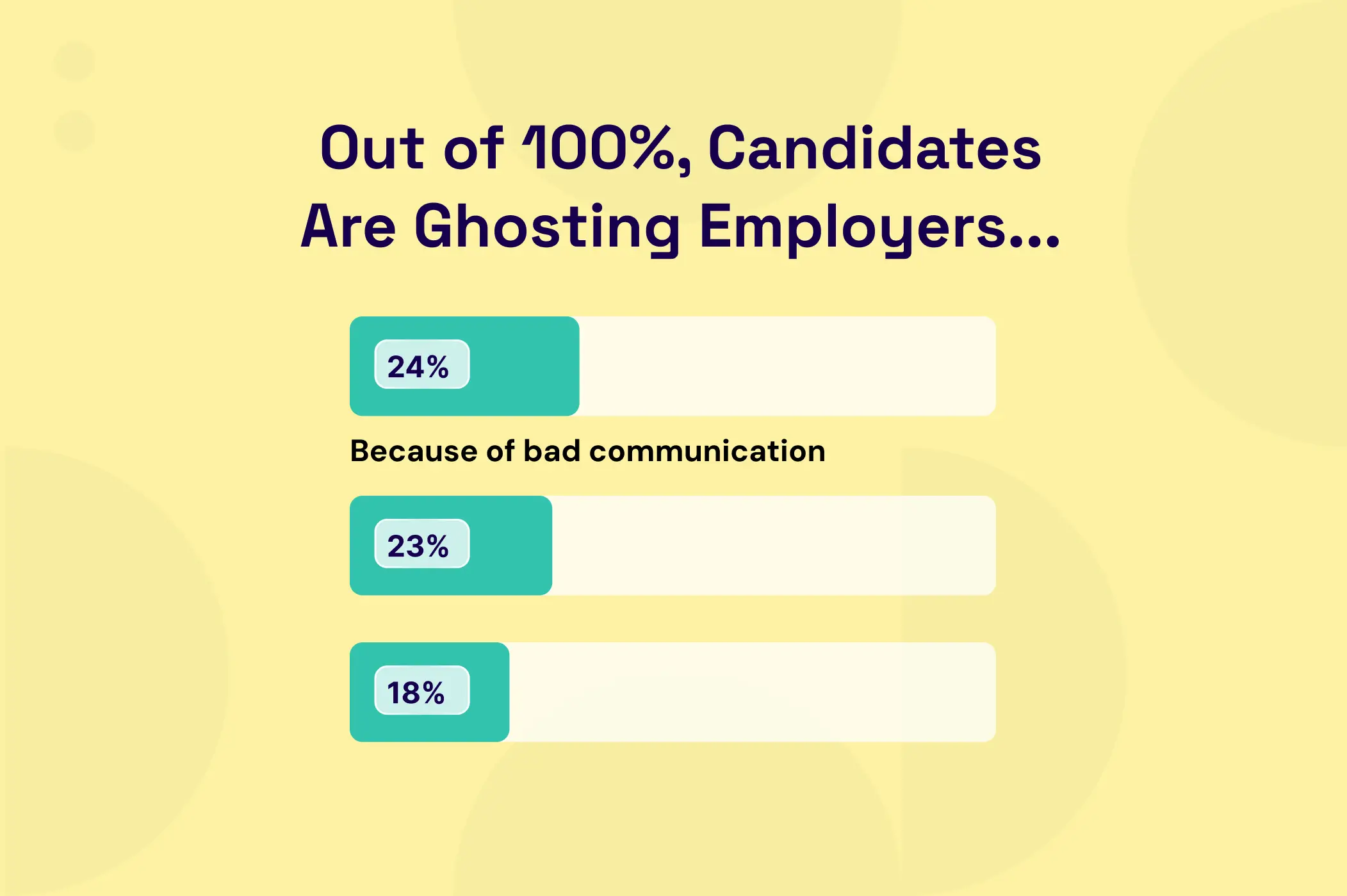
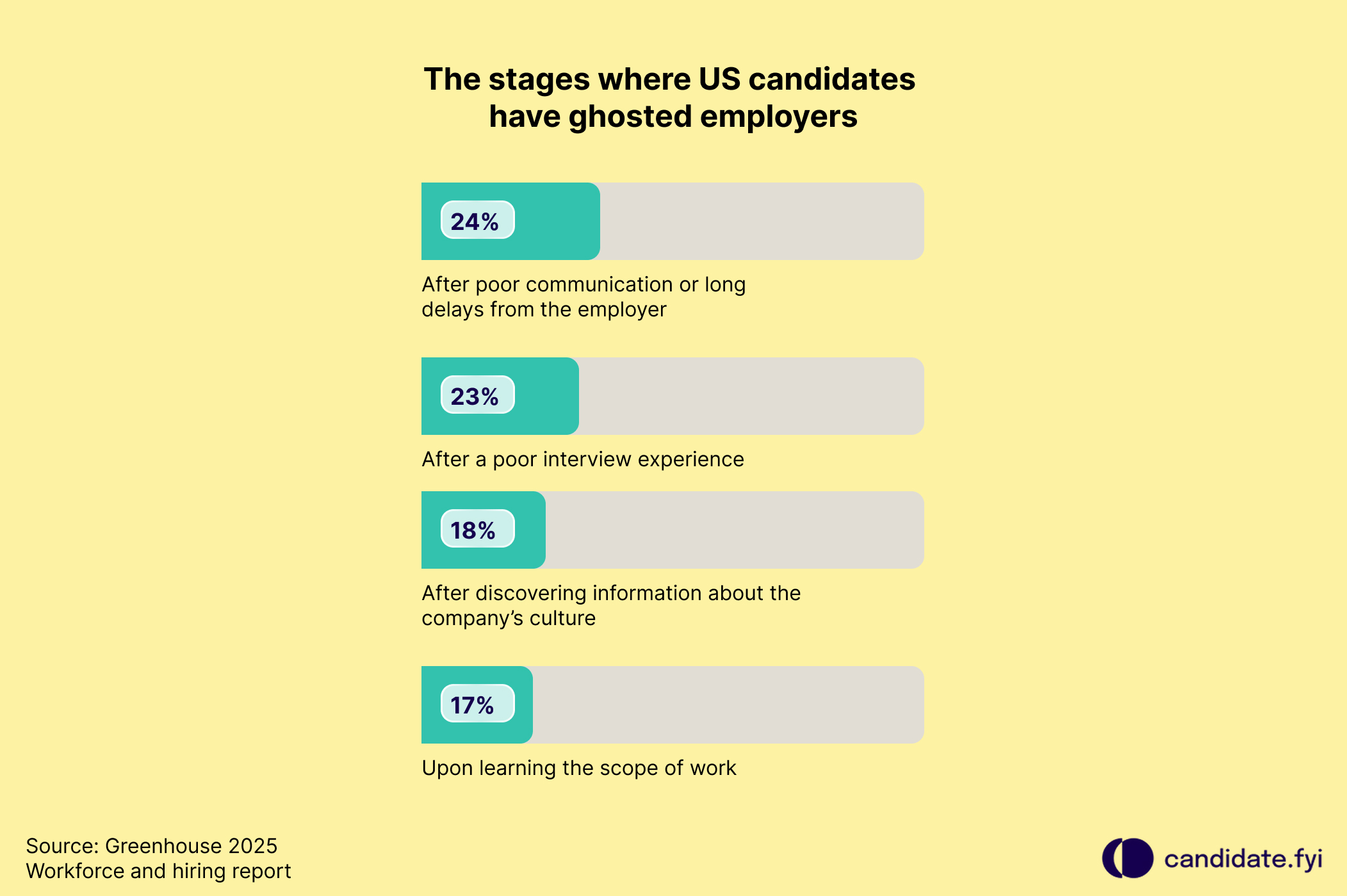
Greenhouse reports that 50 percent of candidates have ghosted employers, and 24 percent of those cite slow communication or long delays as the reason. Many of those delays are not intentional. They happen because coordinators are too busy managing logistics to close the loop on candidate questions or provide updates between interview stages.
Improving Candidate Experience Beyond the Calendar
Candidate experience is often measured by survey scores collected after the hiring decision, but the real experience is measured during the process, not just after the decision.
A candidate who receives that thoughtful message before their interview is going to feel more enthusiastic about the job because they can see the company cares about everyone who goes through their hiring process, not just the ones who get hired.
These interactions do not require complex tools or lengthy processes. They require time and intention, both of which become available when automated interview scheduling removes the repetitive work that fills up a coordinator's day.
Analyzing Hiring Data to Identify Process Bottlenecks
Recruiting coordinators see the entire hiring process from a unique vantage point. They know which interviewers create the most reschedules, which stages of the process take the longest to schedule, where candidates tend to drop off, and when hiring managers fail to provide feedback on time.
The problem is that most coordinators never get the chance to act on these observations because they are too busy executing the next round of schedules. When scheduling is automated, coordinators can shift from reacting to problems to diagnosing root causes and recommending fixes.
This work requires access to data, which is why it pairs well with AI recruiting tools, like candidate.fyi, that track scheduling actions and surface patterns. Coordinators who can analyze metrics like time to schedule, interviewer decline rates, candidate response times, and stage-by-stage drop-off rates gain the ability to identify what is breaking and why.
Leveraging Data Analytics From Automated Scheduling
When scheduling actions are tracked automatically, coordinators gain visibility into the patterns that drive hiring efficiency.
Nitin Moorjani, a recruiting operations leader, described the shift this way:
"Reporting in recruiting has always been low level. You cannot see how many interviews you run each week or how much load sits on each coordinator. When you connect scheduling to candidate experience scores, everything becomes clear."
That clarity allows coordinators to make recommendations based on evidence rather than anecdotal observations. They can show hiring managers which stages create the most friction and which interviewers need training on timely responses.
Join the First Community for Recruiting Coordinators
The Coordination Hub is the first Slack community exclusively for recruiting coordinators, where you can finally swap scheduling workflows, troubleshoot ATS nightmares, and navigate career growth with people who actually get it.
Coaching Interviewers to Deliver Better Candidate Experiences
Interview quality varies widely across most organizations. Some interviewers are prepared, engaged, and skilled at assessing candidates. Others show up unprepared, ask generic questions, or create experiences that leave candidates confused about the role or the company.
Recruiting coordinators interact with interviewers constantly, which means they see these patterns more clearly than anyone else on the talent team.
When coordinators have the capacity to address these issues, they can spend time addressing issues such as a lack of prep materials sent to the candidate or interviewers who miss feedback deadlines. This type of coaching requires time and visibility into performance data, both of which are difficult to access when coordinators are focused entirely on logistics.
Ensuring Timely Follow-Ups With Candidates
One of the most common sources of candidate frustration is the silence that happens after an interview. Candidates finish their loop, submit any requested materials, and then wait days or weeks without hearing anything.
This candidate frustration is only growing in 2026 because silence is now considered the new normal. However, this isn’t a single role’s fault. The issue results from broken feedback loops.
- A hiring manager forgets to review scorecards.
- An interviewer does not submit their assessment on time.
- A decision gets delayed because someone is traveling or out of the office.
All of these symptoms can be addressed if coordinators are freed from scheduling admin. They will be able to take ownership of the follow-up process, specifically track which interviewers have submitted feedback and keep candidates informed constantly.
Designing and Testing New Recruitment Workflows
Most recruiting processes were designed years ago and have not been revisited since. Teams keep using the same interview and communication structures because they worked long ago.
Recruiting coordinators are in the best position to identify which parts of the process need redesign because they see where the friction shows up most often. When they have the capacity to experiment, they can test new workflows and measure the results.
This might include piloting a new interview panel structure to reduce scheduling complexity or testing self-scheduling tools for certain candidate segments. These experiments do not require large budgets or executive approval. They require time, curiosity, and the ability to measure outcomes.
Managing Employer Brand and Candidate Engagement Strategies
Employer brand is often treated as a marketing function, but candidates form their strongest impressions during the interview process. The way a company communicates, how quickly they respond, and how organized the process feels all contribute to whether a candidate views the employer as competent and desirable.
Recruiting coordinators control many of the touchpoints that shape this perception. When they have the capacity to focus on candidate engagement, they can improve how the hiring process reflects the company's values and culture.
This work includes:
- creating branded communication templates that feel consistent and professional,
- designing candidate welcome packets that provide context about the team and role,
- managing candidate portals that centralize interview details and prep materials,
- and gathering feedback from candidates to understand how the process is perceived.
These efforts do not require large budgets, but they do require attention and iteration.
Utilizing Automated Interview Scheduling Tools
The shift from admin to strategy depends on having the right tools in place. Automated interview scheduling platforms remove the repetitive work that consumes most of a coordinator's day, which creates space for the higher-value tasks described in this post.
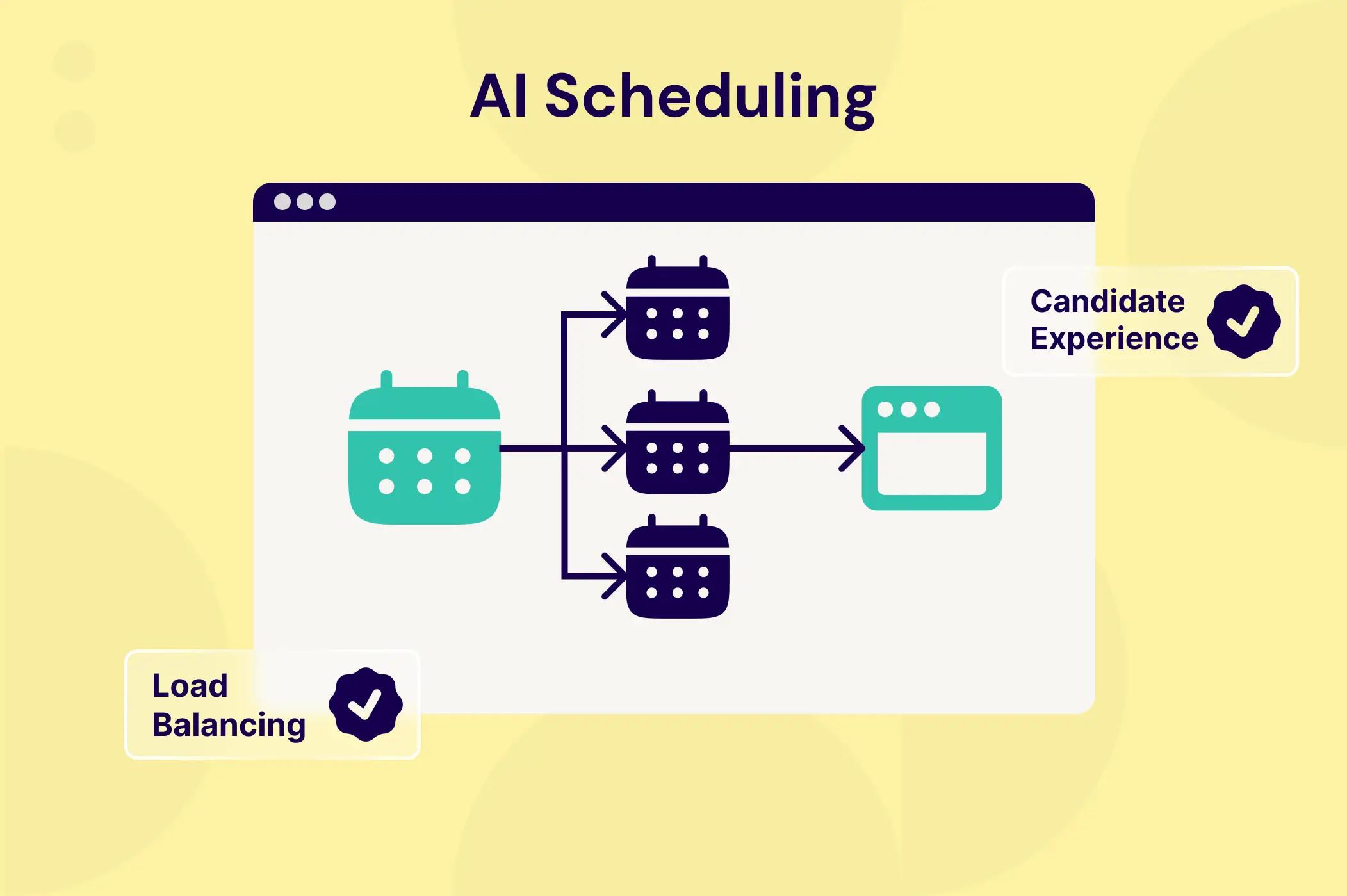
When an AI scheduling agent handles confirmations, reminders, conflict checks, time zone adjustments, and rescheduling logic, coordinators gain the capacity to focus on relationship-building, data analysis, interviewer coaching, process design, and employer brand.
Data from our customers shows the impact. At Relativity Space, scheduling time dropped from 2.8 days to 16.2 hours after implementing automated interview scheduling, a 76 percent improvement in just six weeks.
Cory O'Brien, who leads talent operations at Relativity Space, described the change:
"In our first month, we averaged 2.8 days to schedule interviews. Now, just halfway through month two, we've reduced that to 16.2 hours — a 76% improvement in a very short amount of time."
Further, when our customers implement our automated interview scheduling agent, fyi, 46 percent of scheduling tasks are handled automatically. That’s half the work of a recruiting coordinator who can now focus on strategic tasks.

The Future of Interview Coordination
The pressure on talent teams is not easing. Application volume continues to rise and budgets remain tight. Recruiting coordinators who remain stuck in manual scheduling workflows will struggle to keep up with the volume.
The teams that invest in automated interview scheduling and redefine the recruiting coordinator role around strategy rather than admin will gain a meaningful advantage.
The era of coordinators as invisible executors is ending. The next phase belongs to coordinators who can shape the hiring process rather than just manage the calendar.
Questions & Answers
What do recruiting coordinators do?
Recruiting coordinators manage interview logistics, including scheduling interviews, coordinating availability across hiring teams, handling reschedules, and updating the ATS with scheduling details. When scheduling is automated, coordinators can shift their focus to higher-value work like building candidate relationships, analyzing hiring data to identify bottlenecks, coaching interviewers, designing new workflows, and managing employer brand strategies. The role is evolving from purely administrative execution to strategic advisory work that improves hiring outcomes.
How do you become a recruiting coordinator?
There is no formal degree or certification required to become a recruiting coordinator. Most coordinators start in administrative, operations, or customer service roles and transition into talent acquisition when a scheduling need appears. The role requires strong organizational skills, attention to detail, and the ability to manage complexity. As the role becomes more strategic, coordinators benefit from developing data analysis skills, learning talent acquisition technology, and building process improvement capabilities that allow them to contribute to recruiting strategy.
How do I keep candidates engaged?
Keeping candidates engaged requires clear, timely communication throughout the hiring process. This includes setting expectations upfront about timeline and next steps, providing personalized touchpoints before and after interviews, responding quickly to candidate questions, sharing updates even when the final decision is delayed, and making the process feel organized and respectful of the candidate's time. Automated interview scheduling helps by reducing delays and keeping the process moving, while recruiting coordinators can focus on the relationship-building and communication work that drives engagement.
What tools can I use to automate recruiting tasks?
AI recruiting tools can automate many of the repetitive tasks that consume recruiting coordinator time, including interview scheduling and coordination, candidate confirmations and reminders, conflict detection and rescheduling, time zone adjustments, and ATS updates. Platforms like candidate.fyi use AI agents to handle these tasks autonomously while keeping coordinators in control of the overall process. When scheduling is automated, coordinators gain capacity to focus on strategic work like candidate relationship-building, data analysis, interviewer coaching, and process improvement.
More Articles

AI in the Recruiting Coordinator Workflow: What 2026 Will Bring
AI now handles 46 percent of interview scheduling tasks. See what this means for recruiting coordinators, candidate experience, and hiring in 2026.
AI Scheduling vs. Self‑Service Links: Which Delivers Better Candidate Experience?
Booking links feel like a quick win because they eliminate the initial email tag. However, treating enterprise hiring like a simple calendar transaction creates hidden costs around interviewer burnout and disjointed candidate experiences.

The Quiet Power of AI In Interview Scheduling
candidate.fyi is the fastest-growing interview scheduling platform, powered by AI. Our agent, fyi, handles over 80% of scheduling requests without human intervention - integrating seamlessly with your ATS, calendar, and Slack to eliminate back-and-forth and speed up hiring.