We’ve hit the end of 2025, and the biggest shift we saw this year was not a new hiring philosophy or a new assessment trend. It was real, measurable speed inside the part of hiring that usually slows everything down: interview scheduling.
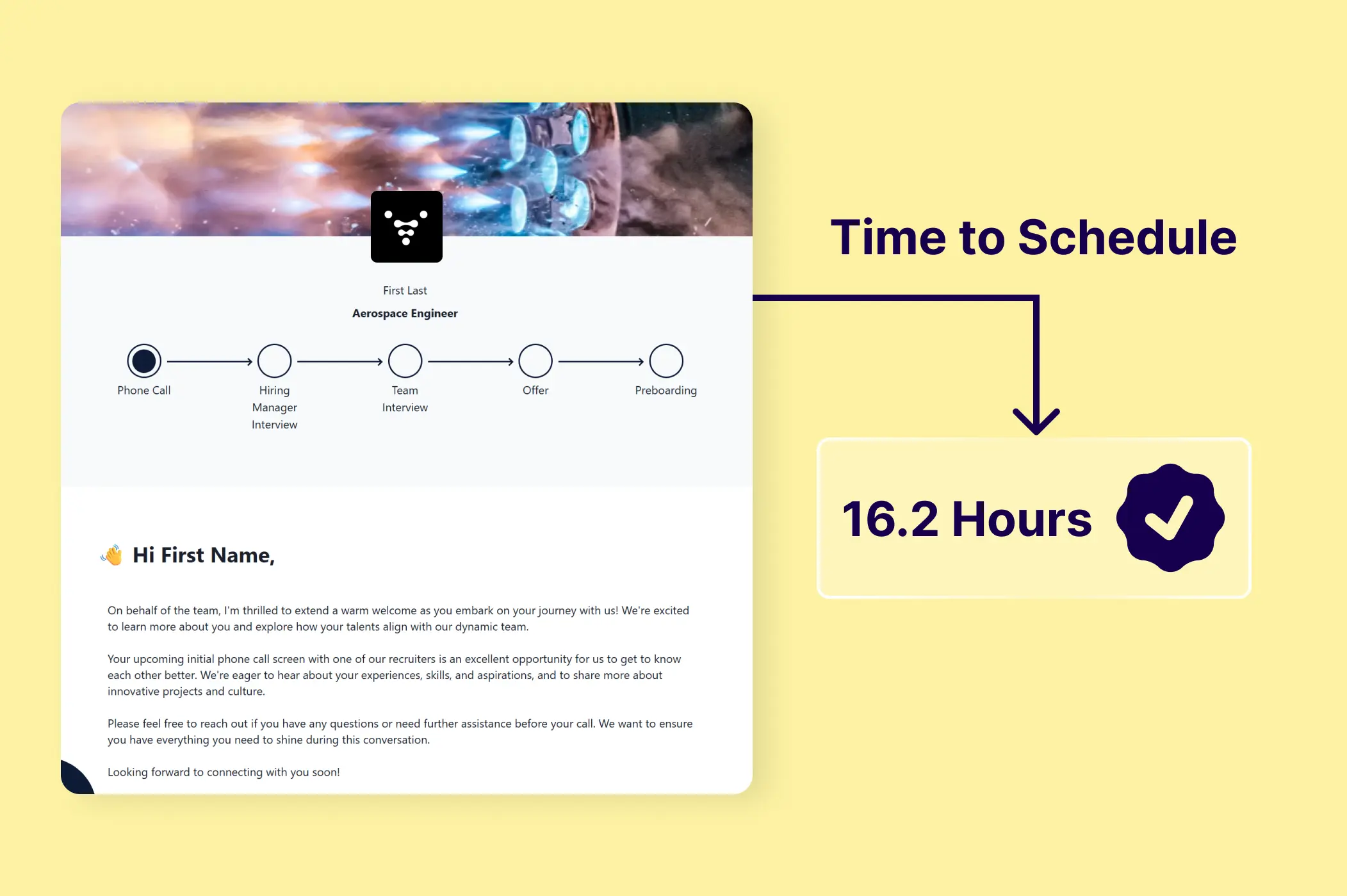
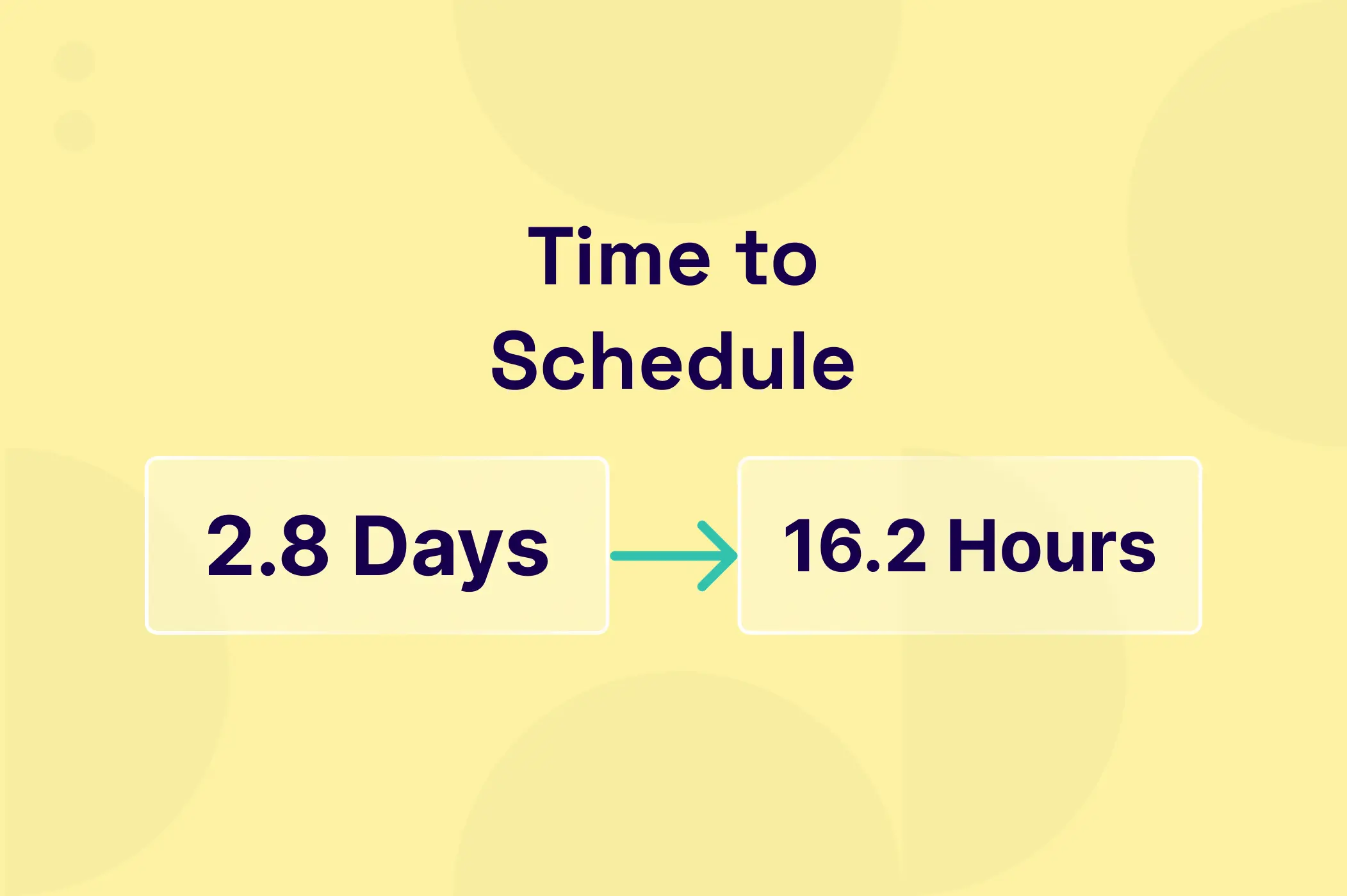
A few weeks ago, Cory O’Brien, a Talent Acquisition leader at Relativity Space, shared something that made our eyes light up. After implementing candidate.fyi, their average time to schedule interviews dropped from 2.8 days to 16.2 hours, which Cory described as “a 76% improvement in a very short amount of time.”
That is the kind of change recruiting teams feel immediately, even before they calculate ROI.
TLDR
Interview scheduling slows down when real people behave like real people and the system cannot adapt fast enough. Interview automation reduces time-to-schedule by handling the repetitive coordination work in the background, including confirmations, reminders, conflict checks, and replacements. Relativity Space saw scheduling time drop from 2.8 days to 16.2 hours, a 76% improvement, after switching to automated interview scheduling.
Why does interview scheduling take days at enterprise teams?
On paper, interview scheduling looks like a simple calendar problem.
In practice, it is a people problem.
Leaders get pulled into last-minute meetings. Candidates respond late because they are working, interviewing elsewhere, or in different time zones. Lots of changes can happen because we’re all human, and a single change can force a coordinator to rebuild a full loop.
That is the core scheduling gap we wrote about in our report. Enterprise teams are trying to run a dynamic human process inside rigid systems that assume everything stays stable.
Jeremy Lyons said it in a way that every recruiting coordinator recognizes. “When it comes to scheduling, it’s always human.”
Jeremy’s point captures the reality: scheduling breaks when a system expects perfect behavior from people who are juggling a hundred priorities.
Once you see scheduling through that lens, “days to schedule” starts to make more sense. Days show up because every step depends on waiting.
Cory O’Brien’s Relativity Space moment
Cory joined Relativity Space and quickly got pulled into the kind of work that matters most in recruiting operations: fixing the bottlenecks that quietly slow down hiring.
One of Cory’s first projects was implementing candidate.fyi, and the early data told a very clear story.
Relativity Space averaged 2.8 days to schedule interviews in its first month. Halfway through month two, that dropped to 16.2 hours. Cory called it a 76% improvement.
Those numbers matter because they describe something most teams believe is normal.
A few days to schedule feels standard in many orgs.
- Hiring managers complain about slowness, but they also keep their calendars locked down and reschedule constantly.
- Candidates wait and wonder what is happening.
So when a team cuts scheduling time that dramatically, it points to a deeper change than “we sent fewer emails.”
It means the coordination system started doing what coordinators have been forced to do manually for years.
Unlock the Future of Recruiting— Book a Demo Today!


How does interview automation reduce scheduling delays?
When people say “automated interview scheduling,” they sometimes picture a basic booking link.
Enterprise scheduling needs more than that.
A link can offer times. It cannot manage exceptions. It cannot handle the chaos that shows up after a schedule is built.
Automation that reduces days to hours works because it takes over the repetitive, high-friction tasks that create delays:
- Confirming times quickly, without waiting on a long email chain
- Sending reminders consistently, without coordinators babysitting the process
- Checking availability across interviewers and time zones
- Detecting conflicts early, before the loop collapses
- Finding trained replacements when a key interviewer drops
- Distributing load so the same “reliable” people do not become the bottleneck
- Keeping candidates informed with clear updates, so they do not lose trust
This is the work that takes the most attention, not because it is hard, but because it is constant.
It interrupts everything.
Coordinators describe it as “living inside the inbox” and “refreshing calendars all day.” That is exactly the kind of work automation is built to remove.
The hidden reason automation speeds up scheduling
Here is the simple reason automation creates big time savings.
Human coordination has a delay built into it.
Even when everyone is trying to help, responses come in waves. These response gaps stack on top of each other.
Automation shrinks those gaps because the system acts immediately when it can.
When the system can confirm, it confirms. When the system can remind, it reminds. When the system can propose replacements, it proposes them.
Coordinators still have control, especially for sensitive loops, but the system removes the “waiting tax” that quietly adds days to every hire.
That is why scheduling drops from days to hours when it works well.
How does faster scheduling improve candidate experience?
Speed also changes how candidates feel.
Candidates often interpret silence as a signal. They read delays as disorganization. Even great recruiters struggle to protect candidate experience when the schedule keeps moving.
When scheduling becomes faster and more predictable, candidates experience the process as:
- Clearer
- More respectful of their time
- Easier to navigate
- Less stressful
This is also where automation supports recruiting coordinators as strategic partners. When the process is calmer, coordinators can focus on higher-value work: improving interview plans, working with hiring managers on structure, and ensuring candidates get context at every stage.
That shift is already happening across the market. It is one reason so many recruiting operations leaders are treating workflow design like product design.
What should talent teams expect in 2026?
Relativity Space is not the only team pushing for faster scheduling. Cory’s story is just a sharp example because the numbers are so clear.
If you are a TA leader or recruiting operations leader, here is the bet we are making as we go into 2026:
Teams will stop accepting “a few days to schedule” as normal.
They will treat scheduling speed like a real performance metric because it influences everything else: candidate experience, hiring manager confidence, offer acceptance, and recruiter workload.
Automation will keep moving deeper into the workflow, starting with the coordination tasks that create the most drag:
- confirmations
- reminders
- conflict handling
- replacements
- status visibility
- reporting tied to candidate experience
This is where AI recruiting tools earn trust, because the value is not abstract. It shows up in fewer headaches and fewer late nights rebuilding loops.