Zendesk's recruiting team faced a problem that enterprise talent acquisition teams know well. They were running a global operation with 50 recruiters across three continents, supported by only 6 recruiting coordinators who were managing interviews across Americas, EMEA, and APAC time zones.
The math was not working.
One month after implementing automated interview scheduling, Zendesk's coordination capacity transformed. They went from averaging 225 interviews scheduled per week to 445 interviews per week, nearly double the throughput with the same team.
Everett Chaffin, Director, Global Talent Acquisition Operations & Programs at Zendesk, described the shift clearly:
"Just in the first month or so since we've gone live, looking at the past six months versus the last month, we've actually gone from about 225 average interviews scheduled per week to 445. It's literally just under double the amount of interviews and we haven't even rolled out a lot of the automation stuff yet."
This post breaks down how Zendesk solved the global interview coordination challenge that most enterprise recruiting teams are still fighting manually.
The Global Coordination Problem
Enterprise recruiting coordination breaks when complexity outgrows capacity. Zendesk's situation illustrates why manual scheduling cannot scale across distributed teams.
Their recruiting coordinators were managing interviews that required coordination across multiple time zones for single candidates. A role might need input from interviewers in San Francisco, London, and Singapore, which meant finding overlapping availability windows while respecting working hours across three continents.
Everett explained the challenge:
"We are sometimes scheduling across multiple time zones. We may have multiple one-on-one interviews from somebody in Americas, somebody in EMEA, somebody in APAC, all from the same team that all need to talk to this candidate. Having something that could automate that for our coordinators was really important."
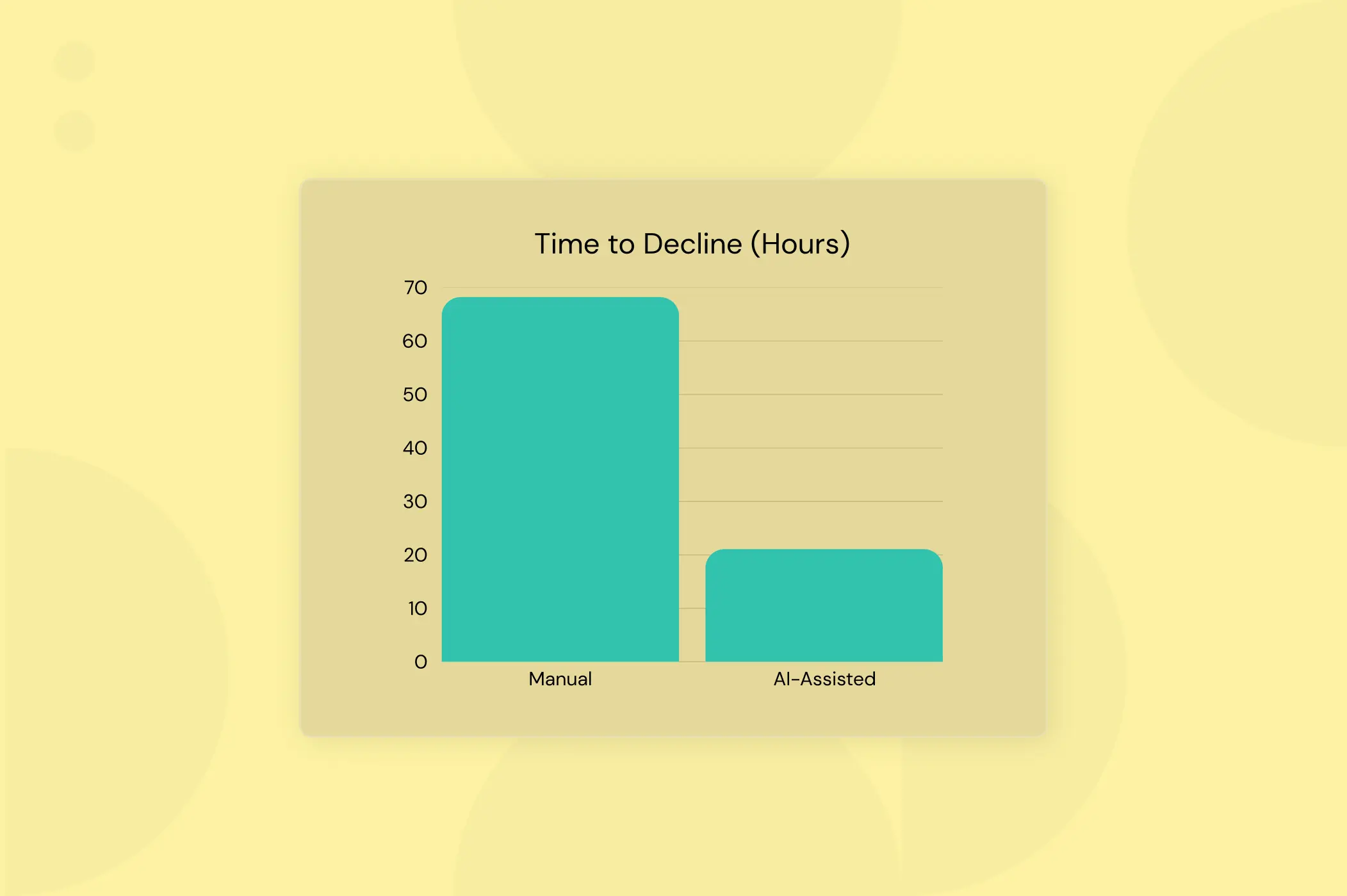
This complexity creates the kind of friction that shows up clearly in coordination data. Our Interview Scheduling Gap Report found that recruiting coordinators spend 46 percent of their time on admin-related scheduling tasks, and manual scheduling takes an average of 243 minutes per interview when coordinators need to collect availability manually.
When coordination becomes this complex, small errors compound quickly. Elissa Jensen, Talent Acquisition Operations Lead at Zendesk, described one example:
"Some of the little details that got overlooked, like scheduling debriefs on the req level versus the candidate level. Just less admin for our coordinators. Or making sure we're not sending six calendar invites by accident. We pride ourselves on our candidate experience, so we need our technology to be working with us for that."
Duplicate calendar invites and scheduling mistakes do not just frustrate candidates. They signal disorganization during the exact moments when candidates are evaluating whether the company operates competently.
Why Their Previous Tools Could Not Keep Up
Zendesk was not starting from zero. They had been using a scheduling tool before switching to candidate.fyi, but the system was not delivering the efficiency their team needed.
The breaking point came when the tool could not adapt to their specific workflows and the support they needed to grow was not available.
Everett described what drove the change:
"The biggest thing for us, and what drove us to candidate.fyi, is that we need something that's very AI focused. How do we do more with less and make sure that we're as efficient as possible?"
This mirrors a broader pattern across enterprise talent teams. The data shows that 62 percent of HR teams are operating beyond capacity while application volumes have increased 32 percent globally. When tools cannot adapt to rising complexity, coordinators absorb the pressure manually, which creates the bottleneck that slows down the entire hiring process.
The challenge is particularly acute for teams using highly customized systems like Workday. Each organization configures Workday differently, which means scheduling vendors need to be flexible enough to match unique business processes and workflows.
Elissa explained the integration challenge:
"Workday, for those of you who aren't aware, is really each organization that uses it has a customized instance. So when we go to look at vendors who need to integrate with Workday, they need to be flexible in meeting the needs of each step of our interview process."
She continued:
"I would say I've told candidate.fyi in the past: they've been the most flexible Workday partner of ours that we've had. Our Workday instance is harder than others. We've had some pretty unique requests during our implementation and they have been able to meet all of our needs within a matter of days maximum."
The AI-First Approach to Interview Coordination
Zendesk's culture shaped their approach to solving the coordination problem. As an AI-first company, they were already encouraging employees to use AI throughout their workday, including in recruiting processes where they allow candidates to use AI during interviews as long as they remain transparent about it.
This mindset meant Zendesk was not looking for basic automation. They needed AI recruiting tools that could handle decision-making, adapt to exceptions, and remove the repetitive work that was consuming coordinator capacity.
Everett explained the strategic focus:
"AI allows us to automate the low value work and really focus on the high value work: high touch points, good quality service, making sure that candidates, hiring managers, recruiters, everyone has a really fantastic experience."
That philosophy aligns directly with what the data shows about how automated interview scheduling redistributes coordination work. Our Recruiting Coordination Wrapped 2025 report found that AI agents handle 46 percent of coordination tasks, candidates handle 26 percent through self-service, and coordinators focus on the remaining 28 percent that requires human judgment.
When nearly half the work moves into automation, the entire role transforms. Coordinators stop spending their days chasing confirmations and managing calendar conflicts, which creates capacity to focus on candidate relationships, process improvements, and the strategic work that actually improves hiring outcomes.
Unlock the Future of Recruiting— Book a Demo Today!


The Results: Doubling Capacity Without Adding Headcount
The most striking outcome from Zendesk's implementation was the speed of impact. Within the first month, their interview coordination capacity nearly doubled.
The team went from scheduling 225 interviews per week to 445 interviews per week, and this happened before they had fully rolled out all of the automation features available in the platform.
This throughput improvement is consistent with what we see across enterprise customers. Our data shows that AI-enabled recruiting coordinators can handle approximately 158 interviews per week compared to roughly 30 interviews per week for coordinators managing schedules manually.
So, Zendesk's results validate what the data has been showing: coordination capacity is a systems problem. When AI recruiting tools handle the micro-delays that compound across every interview loop, the system speeds up dramatically.
The improvement also reflects the smoothness of the rollout. Elissa described the feedback from their recruiting team:
"The feedback we've gotten from our recruiting team is this has been the smoothest rollout for any tool. I think one because they need to use a scheduling tool; there's no way you can go around using it. But the simplicity of candidate.fyi; the UI is very simple to pick up."
What This Means for Enterprise Recruiting Teams
Zendesk's experience reveals several patterns that apply broadly across enterprise talent acquisition.
First, manual coordination breaks under complexity. When you are managing global teams across multiple time zones with customized ATS instances and unique workflows, simple booking tools cannot keep up. The coordination layer becomes the bottleneck that limits how fast the entire hiring process can move.
Second, flexibility matters more than features. Zendesk needed a vendor who could adapt to their specific Workday configuration and build custom solutions when their workflows required it. The ability to iterate quickly and respond to unique needs was more valuable than a long list of pre-built features.
Everett described how this played out:
"Anything that they weren't currently doing that we needed them to do, they were able to receive our feedback, understand what we were trying to solve, and then come back with a solution."
Third, AI creates capacity, not just speed. The value of automated interview scheduling is not just that interviews get scheduled faster. The value is that coordinators gain the capacity to handle significantly more volume without burning out or sacrificing candidate experience.
Teams can scale hiring without scaling headcount proportionally, which addresses the resource constraint that 78 percent of recruiting leaders are facing as budgets stay flat or shrink.
Finally, candidate experience improves when systems handle the admin. Zendesk emphasized that they pride themselves on candidate experience, and they needed technology that supported that standard rather than undermining it with duplicate invites, scheduling errors, or slow communication.
The data confirms this connection. Our Recruiting Coordination Wrapped 2025 report shows that candidate satisfaction scores are highest for the most automated interview stages. Recruiter screens, which often use self-scheduling, score 4.63 out of 5, while hiring manager interviews, which involve more manual coordination, score 4.22 out of 5.
Speed is the new empathy.
The Roadmap: What Comes Next for Zendesk
Zendesk's rollout was deliberately phased. They started by getting the core functionality live and letting teams learn the interface before layering in more advanced automation.
Their next phase focuses on automating the recruiter-to-coordinator handoff and building out more sophisticated workflows that remove additional manual steps from the process.
This iterative approach is how enterprise recruiting operations evolve. Teams do not implement tools and walk away. They continuously refine workflows, add automation where it creates the most value, and use data to identify where the next bottlenecks appear.
The Future of Interview Coordination
Zendesk's story illustrates where interview coordination is headed for enterprise talent teams.
Manual scheduling cannot keep up with global complexity, rising application volumes, and the resource constraints most teams are facing. The coordination layer will either become a competitive advantage through intelligent automation or remain a bottleneck that limits how fast teams can hire.
The data shows that teams using automated interview scheduling achieve dramatically different outcomes: coordinators handle 5x more volume, time to schedule drops from 243 minutes to 27 minutes with self-scheduling, and candidate experience scores improve when delays shrink and communication becomes clearer.
Zendesk proved this in one month. They doubled their interview coordination capacity without adding headcount, created a smoother rollout than any previous tool implementation, and positioned their team to continue scaling as hiring demands grow.
The era of manual coordination is ending. The future belongs to teams that treat interview coordination as a systems problem and invest in the AI recruiting tools that remove the friction holding them back.
Questions & Answers
How does automated interview scheduling work across multiple time zones?
Automated interview scheduling handles time zone complexity by automatically converting availability windows, detecting overlapping working hours across regions, and adjusting calendar invites to show local times for each participant. For global teams coordinating interviews across Americas, EMEA, and APAC, AI recruiting tools eliminate the manual work of calculating time zone differences and finding availability windows that respect working hours in each region. This is particularly valuable for enterprise recruiting teams managing distributed interviewer pools where a single candidate might need to meet with team members across three or more continents.
What is the typical implementation timeline for enterprise interview scheduling tools?
Implementation timelines for enterprise automated interview scheduling platforms typically range from 2-3 months, though this varies based on ATS complexity and customization needs. For teams using highly customized systems like Workday, the timeline includes vendor evaluation, Employee Architecture Review Board approval, security and compliance reviews, procurement processes, sandbox testing, phased rollout, and change management. Zendesk completed their implementation in approximately 2-2.5 months from late October to late January, with deliberate pacing to avoid launching during the hectic start-of-year period. Teams with larger HRIS support can sometimes compress this to 1.5-2 months.
How much interview coordination capacity can AI recruiting tools create?
Data from enterprise talent teams shows that AI-enabled recruiting coordinators can handle approximately 158 interviews per week compared to roughly 30 interviews per week with manual scheduling—a 5x capacity multiplier. Zendesk doubled their interview coordination from 225 to 445 per week within the first month of implementation, before fully rolling out all automation features. This capacity improvement comes from AI agents handling 46 percent of coordination tasks autonomously, including confirmations, reminders, conflict detection, time zone adjustments, and rescheduling logic, which removes the micro-delays that compound across manual scheduling workflows.
How do you evaluate interview scheduling vendors for enterprise recruiting?
Enterprise teams should evaluate interview scheduling vendors using a structured process that includes: responsiveness and honesty throughout the sales process, quality of documentation showing vendor maturity, realistic timelines rather than overpromising, customer references from companies of similar size and ATS setup, roadmap alignment with your evolving needs, flexibility to adapt to unique workflows and customizations, and security/compliance capabilities for handling candidate data across jurisdictions. Ask reference customers "what do you wish you knew" to get beyond sales messaging and understand real implementation challenges. For teams using customized ATS instances like Workday, vendor flexibility and integration capabilities are particularly critical.