Simple booking links feel like a victory when you first implement them because they eliminate the initial email volley and allow a candidate to pick a time without a coordinator interfering. However, as hiring volume scales and interview loops become more complex, the limitations of basic links expose a deeper operational problem.
Booking links function by treating hiring as a simple transaction of finding a free slot and filling it.
Enterprise recruiting operates as an orchestration that requires balancing interviewer loads, managing panel sequences, and enforcing fairness.
When teams rely on basic links, they often trade administrative time for a degraded candidate experience and a lack of strategic control.
This post breaks down why self-service links fail at the enterprise level and how AI orchestration solves the logic gap.
TL;DR: Quick Answer
Simple booking links like Calendly solve the "when are you free" question but fail to handle enterprise complexity like load balancing, multi-panel sequencing, or fairness rules. AI recruiting tools differ by using "intelligent orchestration" which automatically assigns the right interviewer based on training and capacity while presenting a seamless candidate portal experience.
The Situation Enterprise Teams Are Facing
Recruiting leaders are currently operating in a pressure cooker environment. According to Gartner's 2025 Leadership Vision, 78% of recruiting leaders face stagnant or shrinking budgets, up significantly from 52% the previous year.
The demand for efficiency is critical, yet only 23% of recruiting leaders are satisfied with the efficiency of processes in their function.
This creates a dangerous dynamic where teams are being asked to do more with fewer resources. This pressure leads them to adopt low-cost scheduling tools that appear efficient on the surface.
These tools often reinforce the perception of recruiting as administrative support rather than strategic partners.
Where Basic Booking Links Break Down
The fundamental pain point is that booking links do not think.
Tools like Calendly or basic ATS plugins are designed for simple and one-to-one meetings. When applied to complex interview scheduling workflows, they force the recruiting coordinator to manually bridge the gap between the software's limitations and the reality of the hiring process.
We see this failure mode appear in three specific ways:
- Zero Load Balancing: A link grabs the first available slot without knowing that one engineer has already interviewed five times this week while another has done zero. This burns out your best interviewers while others sit idle.
- No Logic for Fairness: Basic tools cannot enforce strict rules, such as ensuring a "Level 4 Engineer" is interviewed by a "Level 5" employee who has completed specific bias training. Coordinators have to manually audit calendars to ensure compliance.
- The Candidate Experience Gap: With 62% of candidates saying they only apply for jobs that meet their EVP requirements, every touchpoint matters. Sending a raw booking link feels transactional because it lacks the brand narrative, prep materials, and warmth that top-tier talent expects.
A scheduling tool that cannot handle logic creates a different kind of manual work rather than solving the problem.
Unlock the Future of Recruiting— Book a Demo Today!


What Talent Teams Actually Need
Based on our conversations with hundreds of enterprise talent teams, the requirement goes beyond simple automation to intelligent control.
Teams have told us they need a system that mimics the decision-making of a seasoned coordinator but executes at the speed of software. Specifically, they need orchestration that sequences back-to-back interviews with breaks to ensure the candidate meets the right mix of stakeholders without manual assembly. They also require dynamic assignment to define pools of interviewers and let the system choose the best person based on load and availability.
Finally, they need a "Home Base" for candidates to centralize communication so candidates aren't digging through emails for Zoom links.
How candidate.fyi Solves the Logic Gap (And What We Can't Do)
We built candidate.fyi to be the best interview scheduling and candidate experience system for teams that have outgrown simple links.
What we solve: We replace the "find a time" friction with an AI agent that understands your hiring rules.
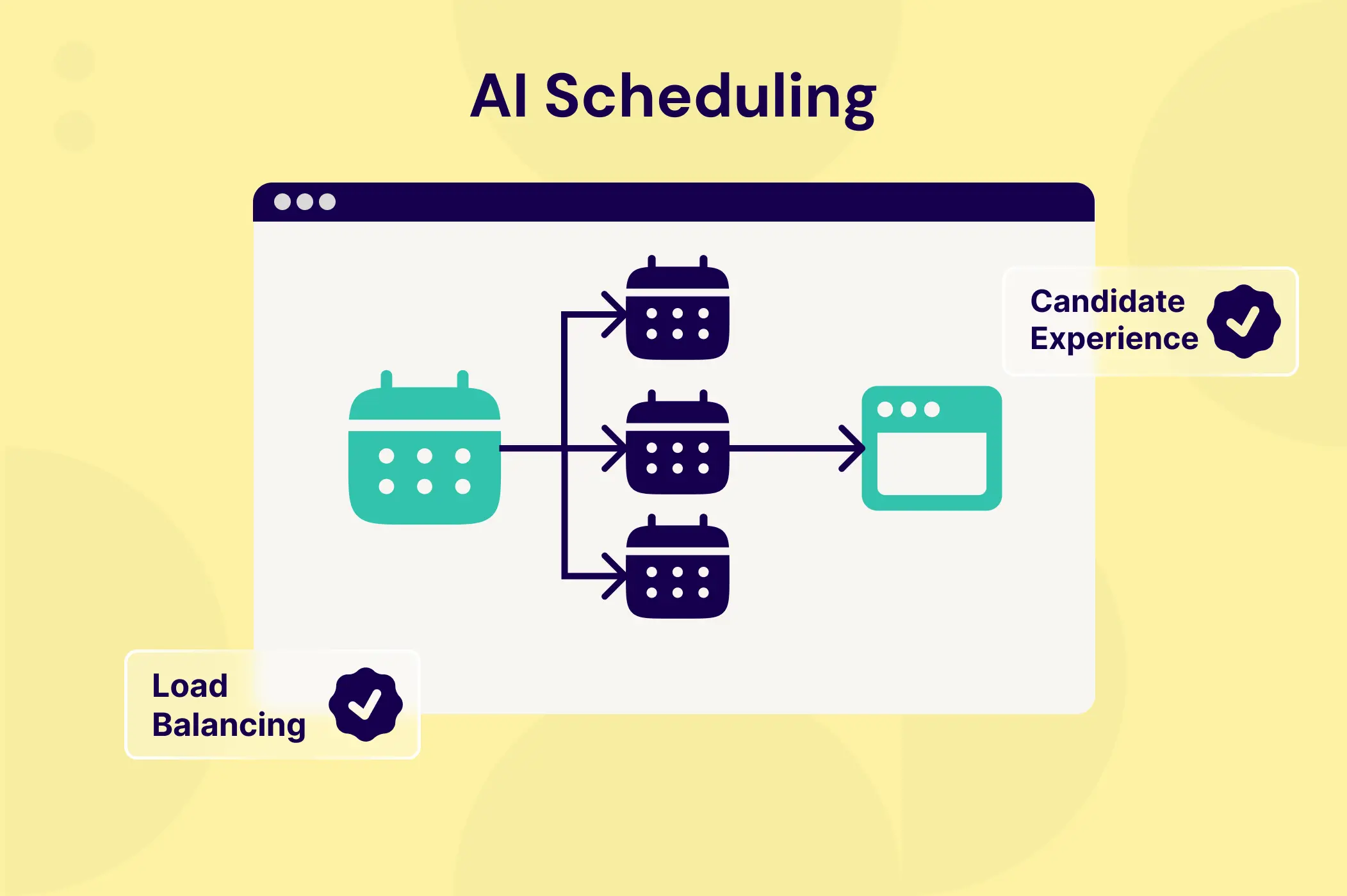
- Smart Assignment: Our AI acts as a load balancer to ensure no interviewer is overburdened.
- Complex Logistics: We handle multi-day, multi-panel, and global time zone coordination automatically.
- The Candidate Portal: We wrap the scheduling experience in a branded hub. Candidates see their schedule, meet their interview team via bios, and access prep materials in one place to create the "consumer-grade" experience that modern candidates demand.
What we can't solve: We believe in being honest about where software ends and human leadership begins.
- We cannot fix a bad interview process. If your interviewers are unprepared or your scorecard is vague, automation just speeds up a bad decision.
- We cannot force hiring managers to care. While we can send automated reminders and make it effortless to participate, we cannot replace the cultural work required to make hiring a company-wide priority.
The Bottom Line
Manual scheduling collapses under pressure, and simple booking links ignore the complexity of enterprise hiring. Automated interview scheduling with AI orchestration removes the administrative burden while elevating the candidate experience.
It shifts the coordinator's role from "calendar tetris player" to "candidate experience architect," which is exactly the kind of strategic shift required when budgets are tight and efficiency is paramount.
FAQ
1. What is the difference between a booking link and an automated interview scheduling tool?
A booking link simply exposes free time slots for a user to pick. An automated interview scheduling tool like candidate.fyi uses AI to apply logic regarding load balancing, interviewer training levels, and panel sequencing before offering times, ensuring the schedule aligns with hiring strategy rather than just calendar whitespace.
2. How does AI scheduling improve candidate experience?
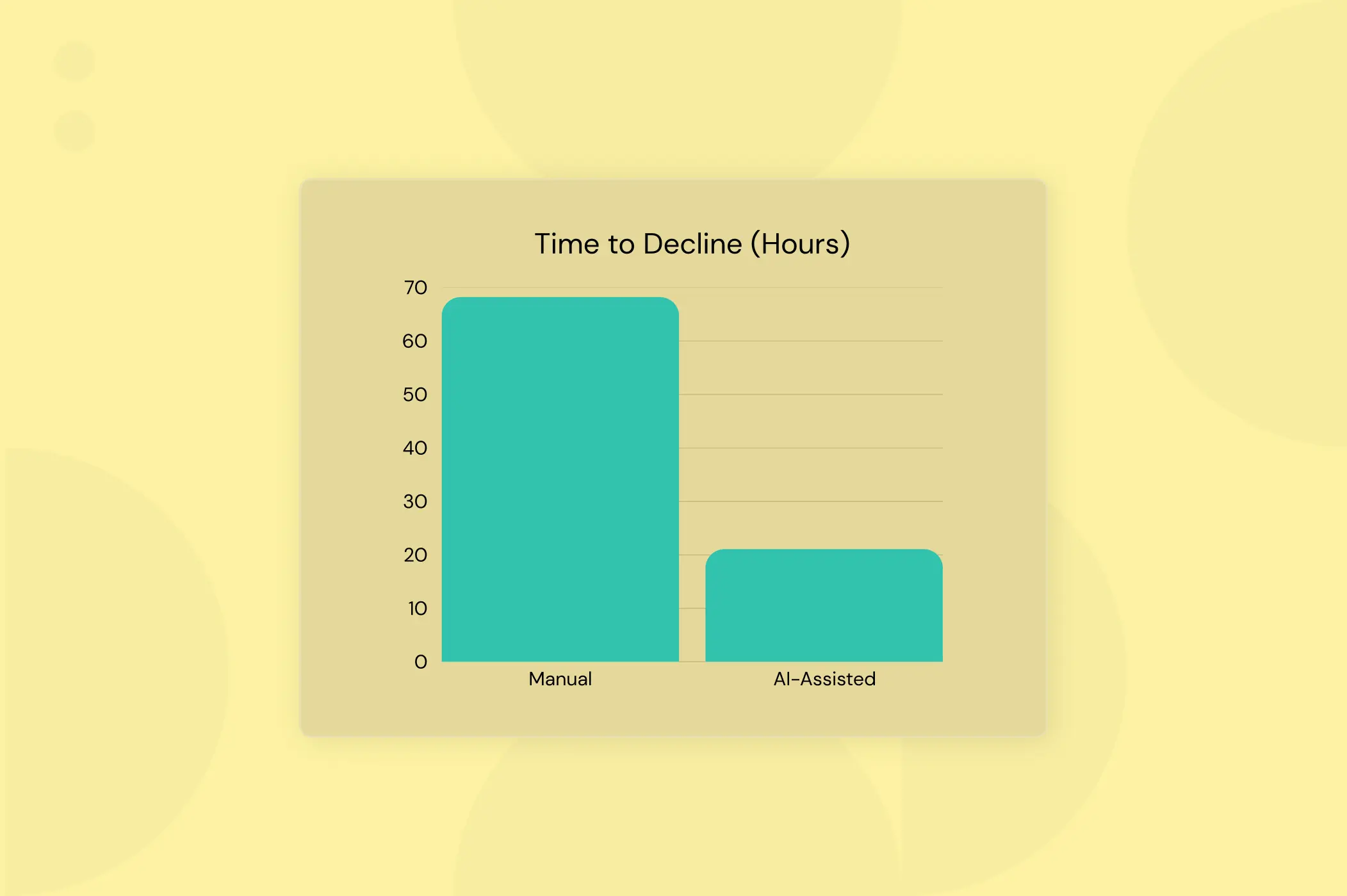
AI tools reduce the tedious delays that frustrate candidates. Furthermore, platforms like candidate.fyi provide a candidate portal that centralizes logistics, prep materials, and company culture info, making the candidate feel guided and valued rather than processed.
3. Can AI tools handle complex panel interviews?
Yes, they can coordinate multiple calendars simultaneously unlike basic schedulers. They can sequence back-to-back interviews, insert breaks, and ensure the right mix of stakeholders are present without manual coordination.
4. Why is load balancing important in interview scheduling?
Without load balancing, the most available interviewers get overbooked which leads to burnout and interview fatigue. AI recruiting tools track interview volume per person and automatically route new interviews to underutilized team members to maintain fairness and energy levels.
5. Do I still need recruiting coordinators if I use AI scheduling?
AI removes the repetitive administrative work which allows coordinators to focus on higher-value tasks like candidate relationships, offer management, and improving the overall hiring process. It elevates their role from support to strategy.